

In this issue
We held a study group from January through March, with an in person review/cram session at the end of March. Emily Ozmon and Jackie Kronstain were facilitators, and Emily brought a lot to the session having just taken the exam last year.
There were 4 attendees in the class, and considering it was the first time we held one via Zoom it went very well! Of the 4 attendees, there were 2 taking the course for recertification hours, 1 to sit for the FPC and 1 to sit for the CPP.
I am very excited to announce that Abigail Pekoe is our newest CPP in the Hampton Roads Chapter. She took the exam and passed in April. Congratulations Abigail!
The next study group is being planned for January, 2022.
Jackie Kronstain/Education Co-Chair
2021 1sth Quarter Newsletter 
President's Report

Note from Tiffani Gray, CPP - President
New Year, New You! This is among the many, many sayings we hear at the beginning of the year. Where we embark on new goals, new aspirations, new dreams, and new endeavors. Let’s look forward into this year with hopefulness and glad tidings.
In the January Issue of PayTech Magazine, we were delighted to find out we placed THIRD in the Educational Outreach & Community Services contest for the 2020 National Payroll Week Contest!
It was such a great award and kudo to Monique Rich, CPP our NPW Coordinator for her hard work and planning. 


The HRAPA celebrates 20 years in 2021, and I’m so excited and honored to lead such a great chapter. I endeavor to ensure our chapter continues to provide quality payroll education, provide impactful community service, and maintain a healthy and encouraging environment for payroll professional across all of Hampton Roads. I am hopeful we can strive and thrive for another 20 years as we build a bridge of interest and comradery with Millennials and Generation Z and ensure we pass on the torch to the next generation of payroll leaders.
Yours truly,
Tiffani L. Gray, CPP HRAPA President
Federal News

IRS Provides Guidance on Paying Deferred Social Security Tax
The IRS provided guidance on how employers can pay the deferred amounts form 2020 of both the employer and the employee share of social security tax (COVID-Tax Tip 2021-32,3-10-21).
Employers Share. The Coronavirus Aid, Relief and Economic Security (CARES) Act allowed employers to defer the deposit and payment of the employers share of social security tax for deposits due on or after March 27, 2020, and before January 1, 2021, as well as deposits and payments due after January 21, 2021, that are required for wages paid on or after March 27, 2020 and before January 2, 2021.
Due Dates. One-half of the employer share of social security tax is due by December 31, 2021, and the remainder is due by December 31, 2022. Because both December 31 dates are nonbusiness days, the payments made on the next business day will be considered timely. Any payments or deposits made before December 31, 2021 will be first applied against the payment due on December, 31, 2021 and then applied against the payment due on December 31, 2022.
Employee’s Share. On August 28, the IRS issued Notice 2020-65, which allowed employers to voluntarily defer the withholding and payment of the employee share of social security tax on applicable wages paid between September 1 and December 31, 2020 (Notice 2020-65, 2020 -38 IRB 567). Notice 2021-11 extended the deadline to pay the deferred amounts until December 31, 2021 (Notice 2021-11, 2021-6 IRB 827).
Due date. Employers that chose the deferral must withhold and pay the total deferred employee share of social security tax ratably from wages paid to the employee between January 1 and December 31, 2021. If the employee no longer works for the organization, the employer is responsible for repayment of the entire deferred amount.
Employees should see their deferred taxes in the withholdings from their pay. If necessary, the employer may make arrangements to otherwise collect the total deferred taxes from the employee. Penalties and interest on any unpaid amount will begin accruing on January 1, 2022. Because January 1, 2022 is a nonbusiness day, payments made on January 3, 2022 will be considered timely.
How to repay the deferred taxes. Employers can make the deferral payments through the Electronic Federal Tax Payment System (EFTPS) or by credit or debit car, money order, or check. The IRS prefers receiving payments through EFTPS. The IRS said these payments must be separate from other tax payments to ensure they are applied to the deferred payroll tax balance. IRS systems will not recognize the payment if it is with other tax payments or sent as a deposit.
The IRS planned to upgrade EFTPS in March to include an option to select “deferral payment”. The employer will select deferral payment and then change the date to the applicable tax period for the payment.
I
Local and State News
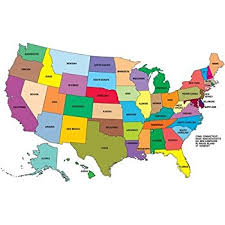
California
Meal breaks cannot be rounded. The California Supreme Court has ruled time punches cannot be rounded for meal periods. According to the court, the meal period provisions in California law are designed to prevent even minor infringements of meal period requirements, and rounding is incompatible with that objective (Donohue v AMN Services, LLC No S253677 (Calif, 2-25-21)).
San Francisco minimum wage to increase. Effective 7-1-21, the San Francisco minimum wage will increase to $16.32 an hour from $16.07 an hour. The San Francisco minimum wage is adjusted annually for inflation (Office of Labor Standards Enforcement, Minimum Wage Poster).
Connecticut
Nexus requirements, tax credit for COVID-19. Effective 3-4-21, when determining whether an employer has nexus with Connecticut, the Department of Revenue Services will not consider the activities of telecommuting employees for tax year 2020 if they were working remotely in Connecticut solely due to COVID-19. Also, certain employees who worked remotely in Connecticut during the tax year may take a state income tax credit on their personal income tax return against taxes paid to certain other states (H.B. 6516.L.2021; Office of the Governor, Press Release, 2-24-21; Department of Revenue Services).
Maryland
UI tax relief. For the first three calendar quarters of 2021, contributory and reimbursable employers with fewer than 50 employees have the option to defer submitting unemployment insurance (UI) quarterly reports. The employer may defer payments until the due date for the 2021 fourth quarter report and payments (1-31-22). Reimbursable employers (with 50 or fewer employees) may also receive authorization from the Division of Unemployment Insurance (DUI) to defer payments for calendar year 2022 until a date the DUI will establish. Employers will not be charged interest for the deferral period. Also, the DUI will calculate UI tax rates for contributory employers based on their pre-pandemic experience rating using a 71-19 computation date and a normal computation date. Employers will receive the lower rate. The rate calculation provision will be in effect through the second consecutive July after the governor lefts the state of emergence declaration (S.B. 496, L 2021; Department of Labor, Relief Act of 2021).
New York
Paid time off for COVID-19 vaccine. Effective 3-12.-21 through 12-31-22, public and private employees in New York will be eligible for up to four hours paid leave per vaccine injection to receive the COVID-19 vaccine (unless the employee will receive more than four hours pursuant to a collective bargaining agreement). For the private sector the leave must be provided at the employee’s regular rate of pay and cannot be charged against any other leave the employee is entitled to, including paid sick leave (S.B. 2588-A/AB 3354-B, L 2021; Office of the Governor).
Texas
UI tax payment due dates extended, voluntary contributions not in effect for 2021. The Texas Workforce Commission (TWC) previously announced the governor suspended a section of state law that set the deadline for employers to make voluntary unemployment insurance (UI) contributions to allow 2021 employer tax rates to be set in July 2021. The TWC has clarified that this means voluntary contributions are not in effect for 2021. UI tax payments for the first quarter of 2021 are now due by 8-2-21 (reports must still be filed by 4-30-21). UI tax payments for the second quarter of 2021 are due by 9-30-21 (reports must be filed by 8-2-21).
Virginia
Creditor garnishment maximum to be based on state minimum wage. Effective 7-1-21 the maximum amount of disposable earnings subject to garnishment will be based on the state minimum wage, which will be $9.50 per hour because of the scheduled increase on 5-1-21. The maximum subject to garnishment will be the lesser of: (1) 25% of disposable income, or (2) the amount by which disposable income exceeds 40 times the state minimum wage or the federal minimum wage (whichever is greater). Previously, the maximum amount was calculated using the federal minimum hourly wage of $7.25 per hour (H.B. 1814, L2021).
HRAPA Anniversary
The HRAPA is very excited to be celebrating 20 years as a chapter this year! It will be a magical filled event that you do not want to miss out on. This event is open to current and prior members and their guests. The event will be held on June 10, 2021, from 4 p.m. to 8 p.m. at Paradise Ocean Club, Ft. Monroe, Hampton.
Regular Registration is from April 13 - May 14th, 2021, pricing $30 Member, $45 Guest. Late Registration (May 15 - June 1, 2021) $45 Member, $60 Guest. Funds must be received by that date to receive the discounted rate. Your registration cost includes your entrance into the venue for the full day as well as food during the event. If you would like to purchase your 20th Anniversary Tank Top or T-Shirt, you can purchase one while you register.
So please Register Today and share this information with any HRAPA member past or present that you know. We hope that you will join us in celebrating this magical anniversary.

Community Service
Community Service Spotlight
By Alana Litz, CPP, SHRM-CP
“When Potential Meets Opportunity” 
Whether you like it or not, your clothing communicates — and it can have a serious effect on your ability to achieve success. Research shows that your appearance strongly influences other people's perception of your financial success, authority, trustworthiness, intelligence, and suitability for hire or promotion. And, because perception is often reality, what you wear not only communicates who you are in the minds of others, but also influences your level of career advancement. In a 1975 book by John T. Molloy titled Dress for Success, the author wrote about the effect of clothing on a person's success in business and personal life. This book was a bestseller and was followed in 1977 by The Women's Dress for Success Book. Together, the books popularized the concept of "power dressing".
Poverty often affects women the most, and its impacts on them and their families can be long-lasting. Providing opportunity for women to meet their potential is a means to improving the quality of life for not only that woman but also her family, future generations, and her community.


During the HRAPA’s February meeting, we held a donation drive for Dress for Success Hampton Roads. The mission of Dress for Success Hampton Roads is to empower women to achieve economic independence and self-sufficiency. They provide each client with professional attire to secure employment; as well as programs to furnish the clients with skills and knowledge to build confidence.
Unfortunately, Debra Dandridge, Executive Director of DFS Hampton Roads, was unable to join us during the meeting due to technical difficulties. However, she did have this to say after our meeting:
“We thank you and your organization for thinking about us for your Community Service Drive. The pandemic has changed how we serve the women, so we are constantly trying new policies and ways to engage the women that have been home with their children for over a year. We do believe that we will make great strides in working with more women in helping them to gain the employment and careers that they truly want.”
For more information about Dress for Success Hampton Roads and volunteer opportunities with this organization, please visit their website at https://hamptonroads.dressforsuccess.org/
Thanks again to our Awesome members!
 Facebook.com/HRAPAChapter
  @HR_APA
 Linkedin.com/in/HRAPA
Professional Development
4 Tips to Be an Effective Professional Mentor
Taking part in a professional mentoring program can be a rewarding learning experience, not only for the mentee but also the mentor. Improving interpersonal skills, growing leadership abilities and building the foundation for a long-term professional relationship are just some of the benefits.
Professional mentoring relationships can create upside for companies as well. Some examples include:
- Increasing knowledge transfer between employees
- Promoting upskilling
- Motivating employees to pursue more professional development
- Increasing teamwork across the organization
- Improving employee retention
- Furthering succession planning efforts
While executives and managers are most commonly viewed as strong candidates to serve as mentors, a job title is not necessarily an indicator of the ability to be an effective mentor. The best mentors are people who are naturally empathetic and enjoy the role of helping, listening to and sharing information with others.
If that describes you — and you have the time and interest to take on this important responsibility — there are several things you can do to make the experience a success for you and your mentee. Here are four tips for making a positive impact as a mentor:
- Choose your mentee carefully
The purpose of a professional mentoring relationship isn’t always for a seasoned employee to impart knowledge to a new or less-experienced employee. That is a traditional arrangement, certainly, but there are others, too.
For example, you might have the opportunity to advise a more senior executive in a reverse mentoring arrangement. There’s also peer mentoring, where colleagues who work at similar levels in the organization pair up to share professional feedback and advice.
Whatever option is available to you, when becoming a professional mentor, take the time to select a mentee who you are confident would benefit from your insights and guidance.
Ask potential candidates, either in person or through a survey, about their professional interests and long-term goals. Also, ask your colleagues to recommend people — including those who work outside of your department or even your organization — who would find your mentorship valuable.
- Stay engaged in the process
Becoming a professional mentor — and working to be an effective one — takes commitment. Making the experience positive for your mentee requires that you keep your responsibilities as a mentor in focus. You’ll probably find that’s easy to do during the initial weeks or months of the mentoring arrangement. But over time, as work demands rise and life inevitably gets busy, it can be all too easy to de-prioritize your mentoring duties.
You can avoid this problem through thoughtful planning. Set aside time in your regular schedule for specific mentoring activities. For instance, you might choose a day every month when you and your mentee can have a one-to-one meeting by video or phone to discuss progress on career goals or work-related issues the mentee is trying to navigate.
Depending on how busy you and your mentee are, you might want to get a little more granular with scheduling. You could set a reminder to send a quick email to your mentee every other Friday, for example, just to check in and find out how things are going.
- Hold each other accountable
Part of becoming an effective professional mentor is opening and maintaining a two-way channel for communicating feedback. So, as you help guide your mentee, make sure to watch for improvement and follow up when appropriate. Ask your mentee to do the same with you. The more equal your partnership, the more mutually beneficial the mentoring relationship will be.
It can be valuable to set clear goals and discuss expectations from the outset of the arrangement. For example, consider asking your mentee questions such as:
- What type of professional development do you hope to achieve through this experience?
- What knowledge, skills and advice are you hoping I can impart to you?
- How do you typically like to learn new information? (Note: How your mentee responds to this question will help you understand how best to tailor your communication approach.)
- Consider creating a professional development plan
How detailed you want or need to be when outlining priorities and objectives for your mentee (and yourself) depends on the purpose, structure and expected duration of the mentoring relationship. But for any professional mentoring arrangement, you’ll want to decide how to track progress and measure success.
One approach is to create a personal development plan. Also known as a PDP, this plan outlines actions the mentee should take to grow as a professional, a realistic timeline for meeting key milestones, and details about any support or resources the mentee may need to tap to achieve outlined objectives.
Be sure to include the mentee in the process of developing this plan. This will help the mentee take ownership of their professional development and be more engaged in the mentoring experience overall. Most important, it will ensure that you set relevant and reasonable goals for the mentee.
Through professional mentoring, you can help a colleague advance or build more confidence as a professional. Or, you canassist a new hire with navigating their responsibilities and the organization’s corporate culture. You can also help an employee working remotely to feel more connected to the company and understand how their contributions make an impact.
One of the rewards of becoming a mentor is that you stand to be enriched by the experience, too. Professional mentoring gives the mentee an avenue to share their insights, ideas, experiences and unique perspectives with their mentor. In short, the mentor-mentee relationship can be a valuable learning and growth opportunity for both parties involved.

Membership Information
Thank you to all of you who renewed your membership for 2021. Our membership drive was a success, we had 48 members renew within January. Our two winners for our $100 gift cards for renewing or joining our chapter in January were Stormy Sanchez and Monique Rich. We hope you ladies enjoyed spending your gift cards. Our current membership is up to 50 members with seven corporate memberships. As your Membership Chair, I would like to encourage all of you to post our meetings on your social media pages and invite your colleagues and friends to attend. This year most of our meetings will continue to be virtual so anyone can attend. Please help us increase our membership so we will be able to continue to bring you the educational topics and payroll support you deserve.
Cynthia Johndrow/Membership Chair
Birthday Celebrations

January
- Abigail Mills 6th
- Kathy Roberts 10th
- Annette Edwards 13th
- Joanne Carr 15th
- Andrea Awa 24th
- Kathryn Stephanitsis 26th
- Teresa Austin 29th
 February
- Alana Litz 17th
- Angela Harris 19th
March
- Morris Claffee 2nd
- Cynthia Johndrow 4th
- Melinee' Cody 13th
- Ella Ragasa 17th
- Melanie Kelly 21st
- Jasmine Jones 25th

Drawings
As a thank you for being such awesome members and attending our bi-monthly meetings we like to give a little something back to you. The winners from our February meeting are:
Membership Drawing ($100 gift cards) - Stormy Sanchez and Monique Rich
Free Bi-Monthly Meeting - Jackie Kronstain
Community Service ($15 gift card) - Jasmine Jones
HRAPA Board
2020 Hampton Roads APA Chapter Board
Tiffany Gray, CPP President [email protected]
Jackie Kronstain, CPP Vice-President [email protected]
Stephaine Parker, CPP Secretary [email protected]
Virginia Merritt, CPP Treasurer [email protected]
Alana Litz, CPP Community Service [email protected]
Jackie Kronstain Director of Education [email protected]
Monique Rich NPW Coordinator [email protected]
Michele Salak, CPP Newsletter [email protected]
Cynthia Johndrow Membership [email protected]
Melinee’ Cody, CPP Webmaster [email protected]
