

2020 4th Quarter Newsletter 
President's Report

Note from Tiffani Gray, CPP - President
As the year 2020 comes to a close, I wanted to take the time to let you know how very much I and the 2020-2021 HRAPA Board appreciate each one of you. Your participation and commitment to our chapter, its mission, and the communities we serve during this very challenging year has not gone unnoticed. It continues to inspire and encourage us to press forward in hopes of a new and prosperous year. Our Chapter is strong because of members like you!
Warmest wishes for a safe, healthy, peaceful, and enjoyable holiday season! We look forward to working alongside each of you in a better, brighter New Year.

Yours truly,
Tiffani L. Gray, CPP HRAPA President
Federal News

IRS Lists Common Errors for Claiming COVID-19 Tax Credits
The IRS released a tax tip to help employers avoid errors when theyare filling out Form 941, Employer’s Quarterly Federal Tax Return, toclaim an employer tax credit [IRS,COVIDTaxTip2020-157,11-18-20]. The IRS advised employers to read the instructions carefully and take their time when completing the form to avoid mistakes. The IRS said that mistakes “can result in a processing delay or a balance due notice, which could mean a delay or require filing an amended return.
Common mistakes:
Here are some common mistakes to avoid when com pleting Form 941:
•Reporting advances requested instead of the advance payments of credits received. The IRS said If the employer has not received the advance payment of credits it requested, the requests should not be reported on Form941.
•Incorrectly reconciling the advance payment of the credit requested and received. If an employer received the advance payment requested, it must reconcile it on Form 941 by reporting the advance payments received on Line13 f and claiming the eligible credits on Lines1 1b,11c,13c,and 13d.
•Form 7200 is used to request the advance payment of employer credit. It is not used to claim the credit. If an employer receives an advance payment of tax credits, but does not report it on Form941, it may receive a balance due notice. Employers that receive a balance duenotice will need to file an amended return using Form 941- X to report their advance payments and claim eligible credits.
Employers using thirdparty payers or reporting agents must tell their thirdparty payer or agent they requested and received an advancepayment of tax credits. The thirdparty payers and reporting agents should also ask employers if they requested and received an advance payment of tax credits using Form 7200, Advance Payment of Employer Credits Due to COVID-19.
DOL Revises Fact Sheet #30 on Garnishments
The U.S. Department of Labor’s (DOL) Wage and Hour Division revised Fact Sheet #30, which provides guidance on the Consumer Credit Protection Act’s (CCPA) Title III limitations on wage garnishments. The latest revision updates an example for amounts subject to a creditor garnishment when a child support order is in effect.
Background
Title III of the CCPA limits the amount of an individual’s earnings that may be garnished and protects an employee from being fired if pay is garnished for only one debt. The CCPA sets the maximum amount
of disposable earnings subject to garnishment in any workweek or pay period, regardless of the number of orders received by the employer. The weekly amount may not exceed the lesser of: (1) 25% of the employee’s disposable earnings for the week, or (2) the amount by which an employee’s disposable earnings for the week
are greater than 30 times the federal minimum wage rate
(currently, $217.50).
New example 5
An employee who has disposable earnings of $370 a week has $140 withheld per week pursuant to court orders for child support. Title III allows up to 50% or 60% of disposable earnings to be garnished for this purpose. A garnishment order for the collection of a defaulted consumer debt is also served on the employer. If there
were no garnishment orders (with priority) for child support, Title III’s general limitations would apply to the garnishment for the defaulted consumer debt, and a maximum of $92.50 (25% x $370) would be garnished per week. However, the existing garnishment for child support means in this example that no additional garnishment for
the defaulted consumer debt may be made because the amount already garnished is more than the amount (25%) that may be generally garnished. Additional amounts could be garnished to collect child support, delinquent federal or state taxes, or certain bankruptcy court ordered payments.
Local and State News
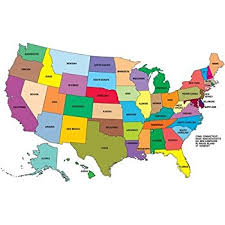
California
Nexus guidance. Wages of employees who typically perform services in another state for an employer located outside of
California will not be subject to unemployment insurance tax, employment training tax, and disability insurance contribution
withholdings if those employees are temporarily performing services within California due to the COVID-19 pandemic. If a worker remains in California performing services after state or federal public health officials have ended stay-at-home orders and the worker could have resumed working at their normal work location outside of California, the worker and the employer will be subject to California employment tax laws [Employment Development Department (EDD), COVID-19 FAQs: Employer Information].
SDI taxable wage base, contribution rate increase. For 2021, the state disability insurance (SDI) wage base will increase to
$128,298 from $122,909. The employee contribution rate will increase to 1.2% from 1%. This means the maximum contribution
will increase to $1,539.58 from $1,229.09 [EDD, October 2020 Disability Insurance (DI) Fund Forecast].
Connecticut
Paid family leave taxable wage base. Effective 1-1-21, employers must begin withholding employee contributions of 0.5% of weekly earnings up to the federal social security wage base ($142,800 for 2021). This means the maximum employee contribution amount is $714 for 2021. There is no employer matching contribution. Contributions will be remitted on a quarterly basis. The newly created Connecticut Paid Leave Authority provides resources for employers.
Delaware
Certain employers required to file and pay withholding taxes electronically. Effective 1-1-21, employers that file withholding returns and make payments on an eighth-monthly and monthly basis will be required to file and pay electronically. Employers that file withholding returns and make payments on a quarterly basis are encouraged to file and pay electronically, although paper forms will still be accepted [DOR, Technical Information Memorandum 2020-2, 11-6-20].
Iowa
Withholding tables updated. Effective for wages paid on or after 1-1-21, the Department of Revenue (DOR) issued updated withholding tables and an updated withholding formula. Updated instructions are also available for both. The tables, formula, and instructions are available on the DOR’s webpage for withholding tax. The supplemental withholding tax rate remains 6% if the amount is paid separately from wages and the flat federal rate is used (this updates The Payroll Source®, §6.4-4) [DOR, News Release, 11-10-20].
Maine
PTO will take effect January 1. Effective 1-1-21, employers will be required to provide paid time off (PTO) to employees. The state Department of Labor’s Bureau of Labor Standards (BLS) recently finalized PTO regulations and published related guidance, FAQs, and posters on its Earned Paid Leave webpage. Withholding tables updated. Effective for wages paid on or after 1-1-21, the wage-bracket and percentage method withholding tables have been revised to reflect the 2021 exemption and deduction amounts (see 2021 Withholding Tables for Individual Income Tax) [Revenue Services, Maine Tax Alert, November 2020].
Massachusetts
Paid family and medical leave taxable wage base. Effective 1-1-21, the paid family and medical leave taxable wage base, which is based on the federal social security wage base, will be $142,800. Employee contributions will continue to be up to a maximum of 0.378% of annual wages, up to the taxable wage base (maximum contribution of $539.78). Employer contributions continue to be 0.372% of annual employee wages, up to the wage base, unless an exemption applies (maximum contribution of $531.22) [Department of Family and Medical Leave, Employer’s Guide].
Missouri
Nexus guidance. The Department of Revenue (DOR) updated its general withholding tax FAQs to address employees who are working remotely (but not specifically related to COVID-19). Wages paid to employees in Missouri for remote work are subject to Missouri state income tax withholding. Any time an employee is performing services for an employer in exchange for wages in Missouri, those wages are subject to Missouri withholding. This applies to employees located in Missouri working remotely for an employer [DOR, Withholding Tax - General Information FAQs].
New Jersey
Electronic filing required for annual reconciliation returns, Forms W-2. Beginning with tax year 2020, Forms NJ-W-3M, Gross Income Tax Reconciliation of Tax Withheld, and all Forms W-2 must be filed electronically by 2-15-21. Previously, electronic filing was optional (magnetic media is not accepted) [Department of Taxation, NJ-WT, New Jersey Income Tax Withholding Instructions, rev. October 2020].
TDI and FLI employee contribution rates for 2021. Effective 1-1-21, the taxable wage base for employer temporary disability insurance (TDI) contributions will increase to $36,200 from $35,300. The employer contribution rates remain 0.1% to 0.75% of annual earnings up to the wage base for most employers and 0.5% for new employers. Employers do not make family leave insurance (FLI) contributions. Also effective 1-1-21, for employee TDI and FLI contributions only, the taxable wage base will increase to $138,200 from $134,900. The employee contribution rate for TDI will increase to 0.47% from 0.26%. This converts to a maximum employee contribution of $649.54 for 2021. For FLI, the employee contribution rate will increase to 0.28% from 0.16%. This converts to a maximum employee contribution of $386.96 for 2021 (this updates The Payroll Source®, §7.3) [Department of Labor and Workforce Development, Rate Information, Contributions, and Due Dates].
New York
Nexus guidance. For a nonresident who has a primary office in New York but is telecommuting from outside the state due to the COVID-19 pandemic, the days spent telecommuting are considered days worked in the state unless the employer has established a bona fide employer office at the employee’s telecommuting location (i.e., the employee’s home). Several factors determine this (see guidance issued in 2006) [Department of Taxation and Finance, FAQs].
Pennsylvania
Nexus guidance. Effective from 3-6-20 through the earlier of 6-30-21 or 90 days after the state Proclamation of Disaster Emergency is lifted, if an employee is working from home temporarily due to the COVID-19 pandemic, the Department of Revenue (DOR) does not consider it to be a change to the sourcing of an employee’s compensation [DOR, Telework During the COVID-19 Pandemic].
Philadelphia nexus guidance updated. The Philadelphia Department of Revenue (DOR) has updated its nexus guidance
to remind employers to withhold and remit wage tax for all Philadelphia residents, regardless of where they perform their
duties [DOR, Wage Tax Policy Guidance for Nonresident Employees, rev. 11-5-20].
South Carolina
Withholding tables, tax formula updated. Effective for wages paid on or after 1-1-21, the Department of Revenue (DOR) has issued updated wage-bracket withholding tables and an updated withholding tax formula. Both are available on the DOR website.
Washington
Paid family leave taxable wage base. Effective 1-1-21, the paid family and medical leave taxable wage base, which is based on the federal social security wage base, will increase to $142,800. A premium of 0.4% of an employee’s wages is split between employees and employers, with the employee paying up to 63.33% (or 0.253332% of annual earnings up to the wage base; maximum contribution of $361.76 for 2021) and the employer paying the remaining 36.67% (or 0.146668% of annual earnings up to the wage base; maximum contribution of $209.44 for 2021). Small employers are exempt from the employer contribution but must still withhold and remit the employee contribution.
Wisconsin
Nexus guidance. For the duration of the national emergency due to the COVID-19 pandemic, Wisconsin will not consider an out-of-state business to have nexus in the state if its only activity is an employee working temporarily from his or her home during the emergency. Telecommuting employees should continue to report income based on existing guidance issued in 2011 [Department of Revenue, Withholding Tax Update, November 2020].
APA National Congress
So this happended at the National level..... Hampton Roads Chapter of the APA had 2 winners in the National Payroll Week Contests.
Our very own Tiffani Gray won 3rd Place in the Individual Activity area. Way to go Tiffani!!! We are so very proud of you and your accomplishment on the personal level.
Then as if that wasn't enough, the HRAPA won 3rd Place in the Educational Outreach and Community Service area. Woot Woot!!!
Thank you each and every one who participated in 2020 to help us reach this high praise from our peers in the Payroll Community.
Member Spotlight
Monthly Member Spotlight
Since we have a lot of awesome members, we take time to shine the light of a member for a month on our chapter Member Spotlight page. This is a chance for you to get to know some of our members. In August 2020 we had two of our members pass the CPP exam. Our January and February Member Spotlight will be Emily Ozmon, CPP and Lisa Stevens, CPP, respectively.
January Member Spotlight

Emily Ozmon is currently employed by the YMCA of South Hampton Roads and has the title of Payroll Administrator. She began her payroll career in 2006. She received her CPP certification in August 2020 and has already volunteered to being one of the facilitators and sharing her knowledge with the upcoming HRAPA Spring CPP/FPC Study group. Her success in passing the CPP exam was a combination of attending the chapter Spring study group, APA Paytrain, and a study partner during COVID.
What Emily loves most about her job is how every day is different and challenging. Also, she gets to know all of the YMCA employees personally and professionally. Well, at least she knows their names if nothing else. She admits the YMCA of South Hampton Roads is strong knit family.
The main unique challenge Emily associated with her job is the seasonal employees and international staff. Both employee categories come with a very unique set of laws and payroll issues. She deals with diverse payrolls from daily pay to adding wages for taxation purposes. There are many tools and options available for staying current and up to date with payroll taxes and regulations. Emily is up to the challenge and she stays current with payroll taxes and laws by attending the bi-monthly HRAPA chapter meetings, using the resources provided by the American Payroll Association, her payroll vendor, and IRS resources.
She has been a member of the Hampton Roads Chapter for 2 years. She joined the Hampton Roads Chapter because her company required Emily to get my CPP and her predecessor was a member and encouraged her to join for networking and support.
Emily's most cherished community service is being a foster parent with the UP Center. She is a caring loving person and another way to share her love and home is to be a foster parent. The Up Center serves a diverse group of children, ranging in age from birth to age 21. Kudos to Emily for being an everyday HERO!
Emily's personal accomplishment is definitely without any doubt is passing the CPP test. In Emily’s spare time you can find her baking, Maybe when COVID is over and we began to meet in person she will bring one of her baked goods to the meeting to share with the members. You can also catch Emily taking the time to read a good book and taking her dog for a walk.
February Member Spotlight

Lisa Stevens is currently employed by the Checkered Flag Motor Car Company and has the title of Payroll Manager. She began her payroll career in 2007. She received her CPP certification in August 2020. Her success in passing the CPP exam was a combination of attending the HRAPA chapter 2020 Spring Study Group and Payroll Source. Read More about Lisa at www.hrapa.com Member Spotlight
Celebrating 20 Years!
That’s right folks. In 2021, the HRAPA chapter will be celebrating 20 years. What an accomplishment. Since our chapter is celebrating our 20th Anniversary, starting in March we will be spotlighting the original members of 2001. It will be exciting to see who was around in 2001, to learn more about them and their story on how the chapter has grown in the past 20 years.
Community Service
Community Service Spotlight
By Alana Litz, CPP, SHRM-CP
In this tough economy, many people are nervous about parting with any part of their hard-earned paychecks to make charitable contributions. For animal-focused charitable organizations, it has been especially difficult. People may wonder why they should give money to animal causes when the world is full of human beings in dire need. The numbers illustrate just how difficult the problems facing animal-based charities are. According to research, animal-based charities only receive one-tenth of the contributions other charitable organizations receive. Between three and four million dogs and cats are euthanized every year in the United States. Animal shelters play a vital role in our communities as they work tirelessly to reunite pets with their owners, shelter those in need, and find new homes for animals that are lost or without a permanent home. The absence of an animal shelter or rescue group in a community can put a real strain on local resources. Thousands of animals could be freely roaming city neighborhoods and the impact on public safety and health could be devastating. Luckily, many cities have animal shelters or rescue groups that take on this burden for both the safety of animals and the public
 .
. 

During the HRAPA’s November meeting, we held a donation drive for the Norfolk SPCA. We are thankful that Peyton Carter from the Norfolk SPCA joined us to provide details on the programs and services they provide. The Norfolk SPCA was established in 1892 and is one of the oldest animal welfare organizations in the country. Originally founded because of concerns about the mistreatment of working horses, the Norfolk SPCA now shelters, treats, rehabilitates, and rehomes household companion animals from throughout Hampton Roads to give them the extra time and care needed to find that forever home. Their mission is to reduce the need in our community for the sheltering of companion animals and to provide the highest quality of care and adoptions when sheltering animals is necessary. Thank you to all our members for your contributions to this worthy cause!
For more information on the Norfolk SPCA and volunteer opportunities with this organization, please visit their website at https://norfolkspca.com.
Thanks again to our Awesome members!
 Facebook.com/HRAPAChapter
  @HR_APA
 Linkedin.com/in/HRAPA
Professional Development
|
Happy New Year! 5 Professional Development Options for Financial Staff An accounting and finance department is only as productive and effective as the staff who comprise it. Good leaders understand this and therefore encourage their employees to continually develop new skills and knowledge — and polish the abilities they already possess. Many businesses that pulled back on professional development activities at the start of the COVID-19 pandemic are reinvigorating these programs— even redesigning them in many cases to accommodate remote teams. These employers recognize that professional development opportunities remain an important way to engage and motivate their employees, as well as expand and strengthen the collective knowledge and overall capabilities of their workforce. Devoting resources to staff training and skills enhancement, even when budgets are constrained, can lead to invaluable ROI for your business. Employees with solid technical skills typically work more efficiently and are less likely to make mistakes on the job. Solid soft skills — including problem-solving, adaptability and empathy — are important to team success, as well. And if teams are working remotely, outstanding communication abilities are an absolute must. Even at a time when businesses are trying to manage through disruption, professional development opportunities can be quick and easy to implement. In many cases, they cost little or nothing to put in motion. If you’re looking for professional development ideas for your accounting and finance staff, including options for remote teams, considering trying one or more of the following: 1. Have employees rotate jobsA highly effective way to add to an employee’s skill set is through job rotation. Not only can such arrangements help workers learn other roles, but they also can increase their business acumen — an essential ingredient for problem-solving and big-picture thinking on the job. Rotating positions can also keep accounting and finance employees from becoming bored with their duties, which helps to improve job satisfaction and retention rates. 2. Make mentorship a priorityMaximize the strength of your multigenerational workforce by asking senior-level employees to serve as mentors and guides to their junior colleagues. Keep in mind that mentoring relationships can work both ways: Those just starting their accounting careers also have unique knowledge and skill sets that more experienced accountants and auditors may not, such as creative ways to reach millennial clients. More than likely, you’ll find that every employee in your organization could benefit from taking part in a mentoring or coaching program. 3. Create cross-departmental teamsCreate project task forces that span two or more divisions so that accounting and finance employees can get to know their colleagues from other parts of the business. Yes, this is possible even in a remote work environment — in fact, it can be an effective strategy for keeping a distributed team feeling connected. Cross-departmental collaboration can boost both technical and interpersonal skills, as staff will have a better appreciation for the roles, responsibilities and workflow of coworkers across the organization. Also, when a technological, marketing or other non-financial business issue arises, your team will know right away which colleagues to contact for help and what skills and expertise they can bring to the table to help solve problems. 4. Arrange for virtual guest speakersConsider hosting monthly lunch and learn sessions, held virtually and led by industry experts. These sessions are a quick, easy and cost-effective way to provide your staff with continuing education. To ensure these events create value, feature current topics that would likely interest all staff, from entry-level accountants to veteran budget analysts. Some ideas include the benefits of accounting automation or cloud computing, changing tax legislation, year-end audits, and the latest U.S. Securities and Exchange Commission (SEC) and Public Company Accounting Oversight Board (PCAOB) developments. Outside specialists not only can provide additional knowledge, but also introduce new ideas and help spark innovative thinking in your finance department. 5. Offer upskilling and reskilling opportunitiesUpskilling and reskilling can help employees prepare for the future of work and make the most of their talents. Some ideas for budget- and schedule-friendly tactics include:
Also, don’t overlook the value of financial aid. If you know your accounting and finance staff will eventually require certification or in-depth study of a new subject, consider offering tuition reimbursement or assistance, if your budget allows. See this post to learn more about why now is the right time to step up accounting professional development. Help employees make room for professional developmentWhen your team members constantly face the challenge of lengthy to-do lists, they’ll be inclined to push professional development to the back burner — even if they’d like nothing more than to do something new that helps to advance their career. And right now, many employees are trying to manage overlapping personal and professional demands due to working remotely. So, it’s important to encourage your team members to make room in their schedule for professional development and help them find that time. One way to ease the burden on your core staff is to hire interim staff. These professionals complement your full-time team by providing skills, knowledge and support when, and for as long as, they are needed. Many of these professionals can work remotely, too. Engaging temporary employees helps your workers can stay on top of their current responsibilities, while also building the skills and knowledge they need to succeed in the future. The initial time and effort to implement the professional development ideas listed above can lead to an increase in your staff’s knowledge base and their overall abilities. Participation in meaningful opportunities also can positively influence employees’ job satisfaction — and, in turn, boost your firm’s retention rates. That’s just one way that a thoughtful and proactive approach to professional development can translate to a win-win for your employees and your business.
|
|

Birthday Celebrations

October
Lauren Smead 13th
 November
- Marissa Ly 4th
- Debbie Stoddard 18th
December
- Terrie Weston 4th
- Sharon Byrum 6th
- Tiffani Gray 7th
- Stephanie Parker 12th
- David West 14th
- Alisa Pearson 15th
- Michelle Ullrich 17th
- Carrie Drinkard 31st
- Lanisha McLendon 31st
- Monique Rich 31st
- Jessica Rothhammer 31st

HRAPA Board
2020 Hampton Roads APA Chapter Board
Tiffany Gray, CPP President [email protected]
Jackie Kronstain, CPP Vice-President [email protected]
Stephaine Parker, CPP Secretary [email protected]
Virginia Merritt, CPP Treasurer [email protected]
Alana Litz, CPP Community Service [email protected]
Jackie Kronstain Director of Education [email protected]
Monique Rich NPW Coordinator [email protected]
Michele Salak, CPP Newsletter [email protected]
Cynthia Johndrow Membership [email protected]
Melinee’ Cody, CPP Webmaster [email protected]
